Skip to content
Emergency Plumber East Syd

Toilet Repairs Eastern Suburbs

Running cisterns, leaking pans, blocked toilets and full replacements — fixed properly, including the awkward old suites in terraces and unit blocks.

Toilet Repairs & Installation in the Eastern Suburbs: the short answer

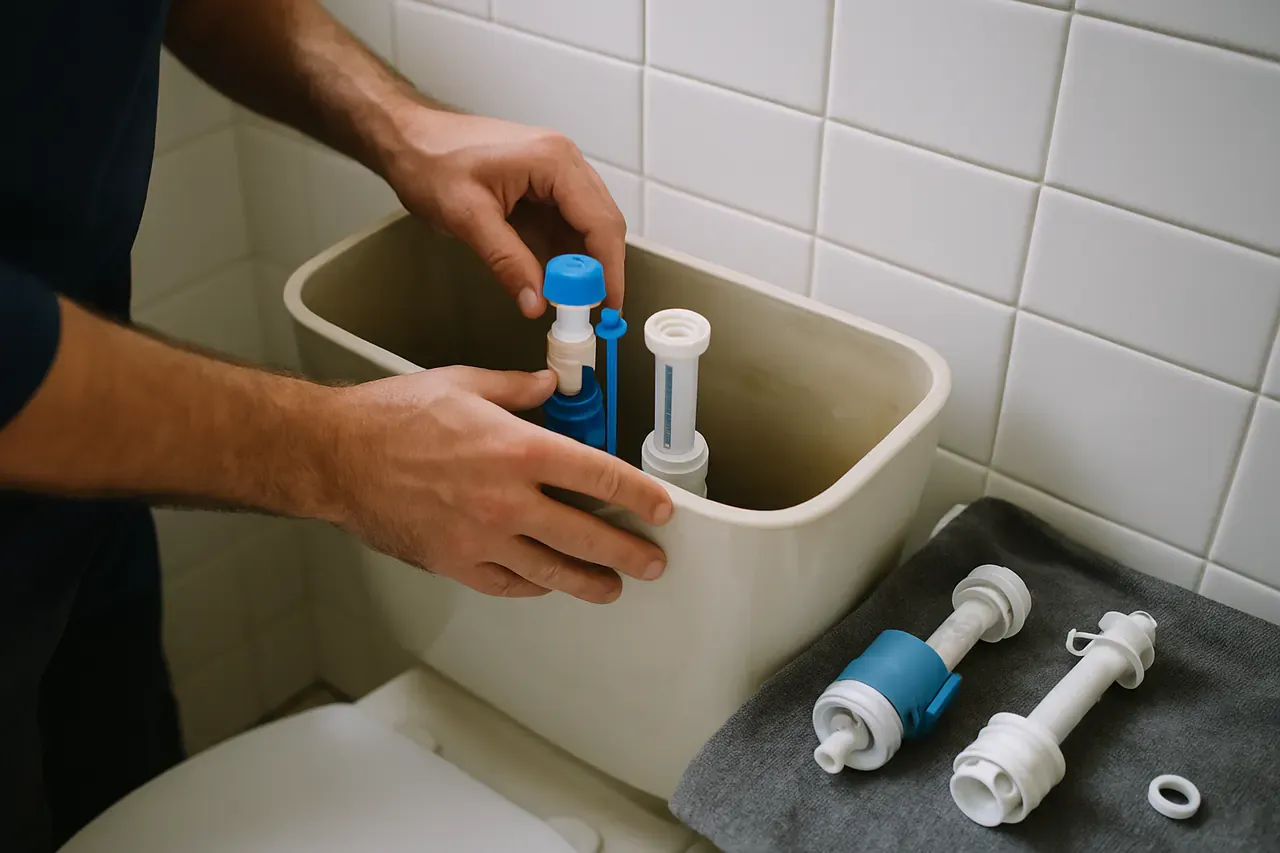
A toilet that will not stop running or filling is usually the cistern internals: replacing the inlet and outlet valves is $220-380 on this site, and a like-for-like pan and cistern replacement is $850-1,800, measured first because older Eastern Suburbs terraces and flats often have setouts a standard suite will not match. An overflowing toilet in a one-bathroom terrace or flat is treated as urgent at any hour at $120-160 an hour; a blocked toilet in a home with a second bathroom can usually wait for a standard visit. Turn the tap behind the cistern off first.

Updated 8 October 2026. 2026 reference prices; the plumber confirms the price in writing before work starts.

Toilet Repairs & Installation in Sydney's Eastern Suburbs

A toilet problem doesn’t have to be dramatic to be urgent — in a one-bathroom terrace or flat, which describes half the Eastern Suburbs, a toilet out of action is a genuine emergency. Licensed local plumbers repair and replace toilets across the area: running cisterns, leaking pans, phantom refills, weak flushes, blockages and complete suite replacements.

The repairs that come up most

Most toilet faults come down to a handful of parts, and most are fixed in a single visit:

  • Running toilets — usually a perished outlet valve washer or a failing inlet (float) valve. Cheap parts, quick fix, and it stops the water bill bleeding
  • Leaks at the base of the pan — often a failed pan collar or rubber seal; occasionally a cracked pan. Never ignore this one: that water is coming from the waste side
  • Leaks between cistern and pan — worn sealing washers or corroded connecting bolts
  • Weak or incomplete flushes — blocked rim jets from mineral build-up, failing cistern internals, or a partial blockage downstream
  • Hissing, groaning or slow-filling cisterns — inlet valve or water pressure issues
  • Blocked toilets — cleared properly, and investigated with a camera if they recur

Replacements — and the old-house catch

The Eastern Suburbs is full of toilets that owe nobody anything: original suites in Randwick semis, 1960s units in Eastlakes walk-ups, chain-pull cisterns still hanging on in a few Paddington terraces. Replacing them is usually straightforward — except for the setout problem. Older homes frequently have a wall-to-waste distance that modern standard suites don’t match. Fitted carelessly, the result is a toilet standing clear of the wall or a leak-prone bodge of offset connectors. Any installation still has to meet the AS/NZS 3500 plumbing standards.

The plumber measures the setout before supplying anything and quotes a suite that fits — including back-to-wall and concealed-cistern options for renovated bathrooms, and 4-star WELS dual-flush models that cut water use sharply compared with any pre-2000 cistern.

Strata and tenancy work

For unit owners, property managers and strata across Bondi, Coogee and Eastlakes, the plumber handles the recurring toilet work that tenanted properties generate — with clear reports, photos where useful, and invoices that say exactly what was done. Where a leak involves the waste stack rather than the suite itself, the plumber documents it so the strata versus lot-owner question is settled with evidence instead of argument.

Book it before it becomes a flood

A wobbly, whispering or weeping toilet is on its way to being a bigger problem — and a blocked one in a single-bathroom home can’t wait at all. Book online or call, any hour, anywhere in the Eastern Suburbs. Plumbing work in NSW requires a licence, and you can check any licence number with NSW Fair Trading.

What it costs

2026 Sydney reference ranges, labour at $120-160 an hour included. The plumber confirms the price in writing before work starts.

Cistern internals replacement (inlet and outlet valves)$220-380
Toilet pan + cistern replacement (like-for-like suite)$850-1,800

Full price list and price estimator →

Whose pipe is it: yours or Sydney Water's?

Your propertyStreetboundary15234
Sydney Water Yours
  1. Water main. Sydney Water's. A leak in the street or on the footpath is theirs to fix: 13 20 90, 24 hours.

  2. Water meter and the pipe from the main. Sydney Water owns and maintains the meter, and repairs the pipe between the main and the meter as a free service, up to one metre inside your boundary.

  3. Pipes from the meter to the house. Yours. Every pipe and fitting on the house side of the meter is the owner's to maintain and repair. A leaking meter tap is fixed free by Sydney Water on 13 20 90. In a flat block, the pipes after the main meter belong to the owners corporation.

  4. Sewer pipe from the house to the main. Yours, all the way to the point where it joins Sydney Water's network, even the part under the footpath; in a terrace row the drain is often shared down the rear lane. The overflow gully must be kept clear: it is the one safety valve your sewer has.

  5. Sewer main. Sydney Water's. A blockage in the main is theirs to clear, and it may repair a private pipe that has collapsed under public land as a free service to residential customers.

A sewer blockage is probably Sydney Water's if

  • the overflow gully keeps surcharging while nobody is using water
  • your neighbours have the same problem, or sewage is coming up in the street
  • a manhole in the street or lane is overflowing

It is probably in your pipes if

  • it only overflows when taps, toilets or showers are being used
  • one toilet, sink or shower drains slowly and the neighbours are fine
  • your terrace shares a drain down the back lane (still private, shared with the row)
Typical layout; yours may differ. Rules as published by Sydney Water, checked October 2026. Faults, 24 hours: 13 20 90.

Frequently Asked Questions

My toilet keeps running — is that worth calling a plumber for?

Yes, and sooner than you'd think. A running toilet silently wastes hundreds of litres a day — it's one of the most common causes of an unexplained high water bill. The usual culprits (worn outlet valve washer or a failing inlet valve) are quick, inexpensive repairs.

Can you replace an old toilet suite in a terrace or older unit?

Yes — it's a specialty of the area. Older Paddington terraces and mid-century units often have non-standard setouts (the distance from wall to waste pipe) that a modern off-the-shelf suite won't match. The plumber measures first and supplies suites made for odd setouts, so you don't end up with gaps, bodged connectors or a toilet sitting off the wall.

The toilet blocks repeatedly even after plunging. Why?

A toilet that keeps re-blocking usually isn't about the toilet — it's a symptom of a partial blockage or damage further down the line: roots in the sewer, a displaced joint or an object lodged past the S-bend. A drain camera settles it quickly, and fixing the line stops the cycle.

First five minutes

Plumbing Emergency? What to Do Right Now

Pick what is happening. These are the safe first steps for the next five minutes, before the plumber arrives.

Burst or leaking pipe: what to do now

Stop the water first, then deal with the mess.

  1. Turn the water off at the meter. Houses and terraces: the meter is in a small box at the front boundary, often set into the front path or behind the fence. Turn the tap clockwise, or turn the lever a quarter-turn so it sits across the pipe. Units: your own stop tap is in the laundry, the bathroom inspection panel or the hot water cupboard; the building tap is not yours to touch.
  2. Keep water away from electricity. If water is near power points, lights or appliances, switch the power off at the switchboard, but only if you can reach it without standing in water.
  3. Drain what is left in the pipes. Open a cold tap at the lowest point of the home (a garden tap is ideal) and switch the hot water system off at the switchboard or the gas tap.
  4. Limit the damage. Buckets and towels under the leak, furniture and valuables moved, and photos for your insurer before anything is cleaned up. In a flat block, tell the strata manager or the neighbour below if water may reach their unit.

Don't use electrical appliances in a wet room, and don't turn the water back on to test it.

Smell of gas: what to do now

Get out first. Make every call from outside.

  1. Don't touch anything electrical. No light switches, exhaust fans or appliances, and no flames or cigarettes. A single spark can ignite gas.
  2. Turn the gas off at the meter if you can reach it safely. The gas is off when the handle sits across the pipe. Bottled gas: close the valve on top of the cylinder.
  3. Open doors and windows and get everyone outside. Pets too. Stay out until you are told it is safe.
  4. From outside, call 000 if the smell is strong, or Jemena on 131 909 for a leak. 131 909 is the 24-hour gas leaks and faults line of Jemena, the gas network for Sydney. They attend free of charge and make the supply safe. If anyone feels unwell or there is a fire, ring 000 first. Call 131 909 (gas leaks, Jemena)
  5. Then book a licensed gas fitter. The network makes the supply safe. Finding and repairing a leak on your side of the meter, and certifying the work so the gas can go back on, is a licensed gas fitter's job.

Don't go back inside to look for the leak, and don't relight pilot lights yourself.

Sewage or drains backing up: what to do now

Every litre you send down the drain comes back up.

  1. Stop running water. No flushing, taps, showers, washing machine or dishwasher until the blockage is cleared.
  2. Keep people and pets away. Sewage is a health hazard. Wear gloves and wash well if you have to touch anything.
  3. Check the overflow gully outside. It is the grated drain against an outside wall or in the rear courtyard, usually near the laundry or kitchen. Clear pot plants, leaves and mulch off it so any overflow happens outside and not through your floor wastes.
  4. Ask next door. In a terrace row the drains are often shared down the back lane. If the neighbours have the same problem, or sewage is coming up in the street, the blockage may be in Sydney Water's main: faults 13 20 90, 24 hours. Call 13 20 90 (Sydney Water faults)

Don't pour chemical drain cleaner into a blocked drain. It rarely clears a sewer blockage, and it is dangerous for whoever opens the pipe next.

No hot water or leaking tank: what to do now

A leaking tank is urgent. A cold shower is usually a repair, not a disaster.

  1. Leaking tank? Turn off its water supply. Close the tap on the cold-water pipe going into the unit. On a rooftop or balcony unit in a flat block, tell the strata manager too.
  2. Turn off its power or gas. Electric: switch off the hot water circuit at the switchboard. Gas: close the gas tap on the pipe to the unit.
  3. No leak, just cold? Electric: check whether the hot water breaker has tripped. Gas: check that your other gas appliances work and whether the pilot light is out; relight it only by following the instructions printed on the unit.
  4. Read the label. Note the brand, model and size printed on the tank. It lets the plumber quote a repair or a replacement before arriving. Near the beach, a unit over about ten years old is often cheaper to replace than to keep repairing.

Don't block or cap the relief valve that drips from the side of the tank. It is a safety device.

Overflowing or blocked toilet: what to do now

Stop the water going in before you do anything else.

  1. Turn off the tap behind the toilet. It is the small tap on the wall or floor beside the cistern. Turn it clockwise.
  2. Don't flush again. If the bowl is still filling, lift the cistern lid and push the outlet valve down, or lift the float.
  3. Mop up straight away. In a unit, tell the strata manager or the neighbour below if water may reach their flat.
  4. Check the other drains. If the shower or floor waste gurgles or backs up as well, the blockage is in the sewer line: follow the sewage steps.

Don't keep plunging once water reaches the rim, and don't use chemical cleaners.

General guidance only. If anyone is in danger, ring 000.

Need a Plumber in the Eastern Suburbs?

Tell us what's happening. Requests are received 24 hours a day, 7 days a week, and a licensed local plumber replies as soon as one is available.

Call now Book a plumber